Confirm the failure point
The contractor checks whether the issue is a broken torsion spring, a stretched or snapped extension spring, or a different problem like a jammed roller, seized bearing, or cable off the drum.
Broken spring and door balance referrals
Describe what the door is doing once and we'll connect you with a local contractor who handles broken spring repair, balance, and safe spring replacement.
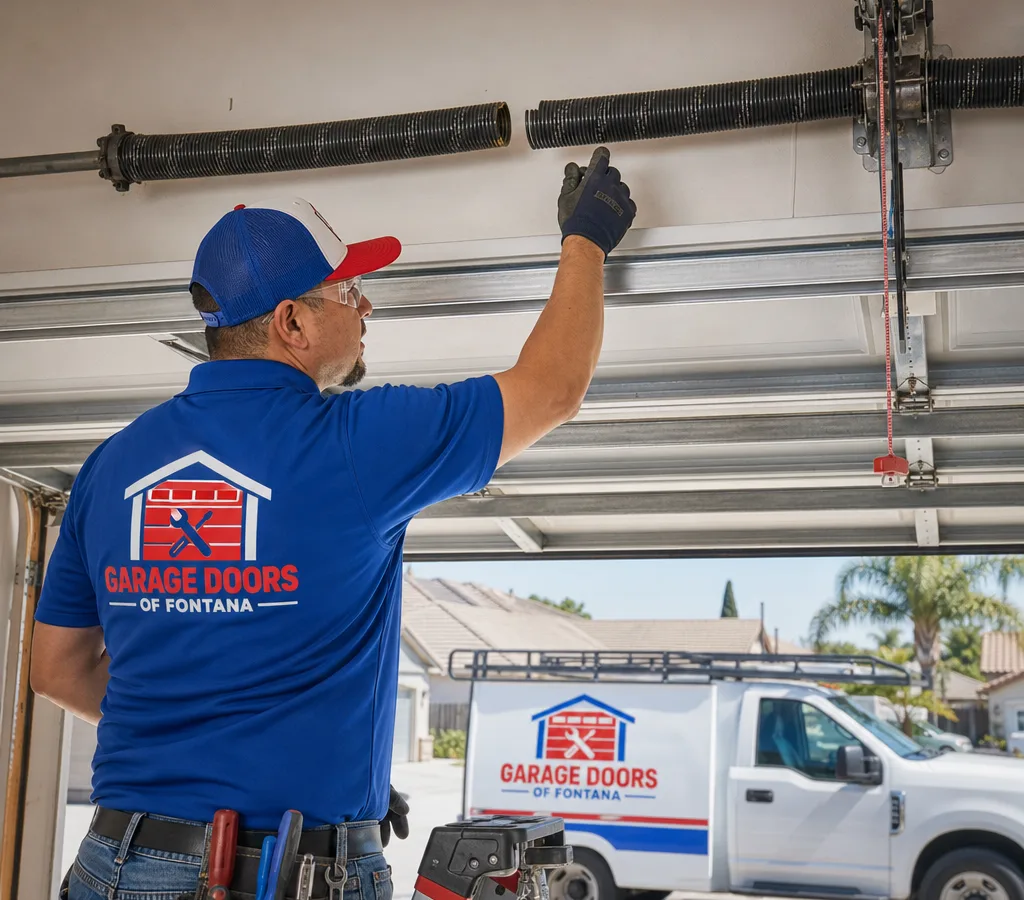
Garage door spring repair is about restoring lift and balance so the door can be opened and closed safely. Springs carry most of the door's weight. When one snaps, the opener may strain, the door can feel dead-heavy by hand, and cables may go slack on the drums.
If you're in Fontana and you heard a loud bang from the garage, then the door suddenly won't lift—or only lifts a few inches—a broken garage door spring is a common cause. You might also see a gap in a torsion spring above the door, or find an extension spring hanging loose along the horizontal tracks.
Because springs are under high tension, this is one of the few garage door issues where stopping and calling matters. Garage Doors of Fontana connects homeowners with local contractors who work on springs, so you can explain what's happening once and talk directly with the contractor who can take it from there.
If the door is stuck closed and you need to get a vehicle out, avoid forcing the door. Disconnecting an opener or lifting a door with a failed spring can bend the top section, pull cables off the drums, or damage the opener rail. A contractor will usually ask what type of spring setup you have, the door size, and what symptoms you're seeing before they head out.
If the problem turns out to be more than springs, the same contractor may also handle related garage door repair like cable resets, track alignment, or opener strain caused by an out-of-balance door.
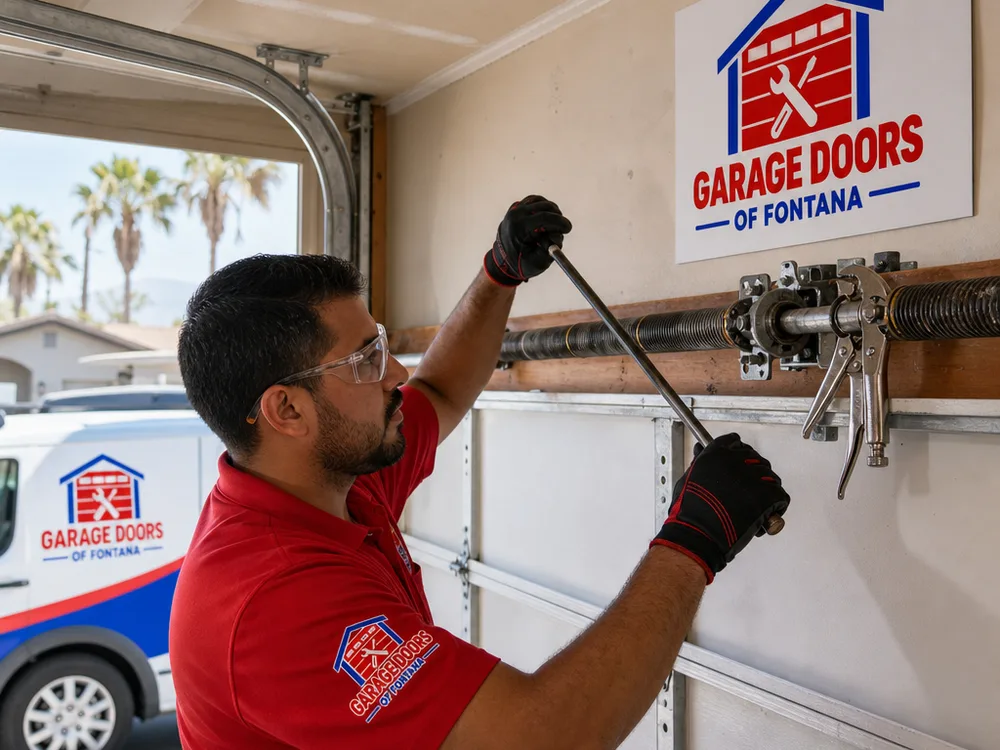
The spring system, lift cables, bearings, and door balance work together. A contractor can inspect the complete setup before explaining the next step.
The contractor checks whether the issue is a broken torsion spring, a stretched or snapped extension spring, or a different problem like a jammed roller, seized bearing, or cable off the drum.
Proper spring sizing is based on door weight and height, drum type, and lift configuration. With torsion springs, wire size and coil length matter as much as inside diameter.
After replacement, the door is balanced so it can stay at mid-travel with minimal drift. That balance check protects the opener and keeps the door tracking correctly.
When a spring breaks, it can shock the system. A careful check often includes lift cables, bottom brackets, center bearing, end bearing plates, and roller condition.
You'll be able to ask about lubrication points, what normal spring noise sounds like, and which signs mean it's time to schedule service before the door locks up again.
One conversation moves you from describing the spring problem to speaking directly with a local contractor.
Share the basics: door size if you know it, whether it's torsion or extension springs, whether the door is stuck open or closed, and what happened right before it stopped working.
Garage Doors of Fontana routes your call to a contractor serving Fontana and nearby areas who handles spring replacement and door balancing.
The contractor can walk through spring options, what they'll check on-site, and how they'll test balance and safety before leaving.
You stay in control. After you talk through the scope and any parts needed, you choose whether to move forward.
If the door won't lift or you can see a spring gap above the header, describe what happened once and get connected with a local contractor who can handle torsion spring replacement or extension spring repair safely.
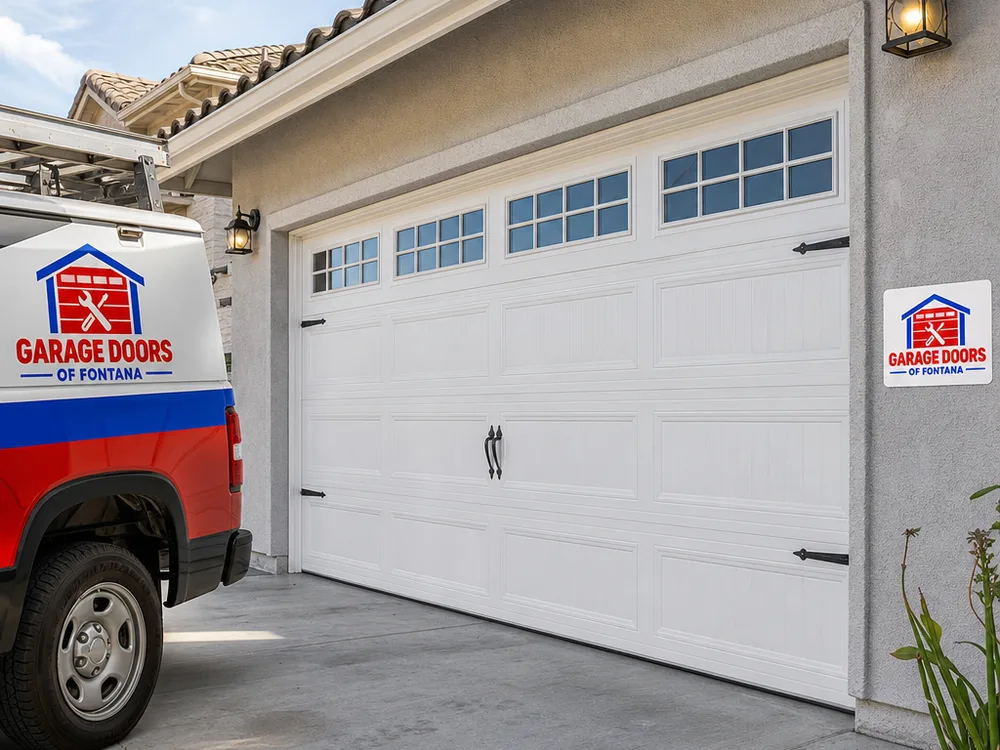
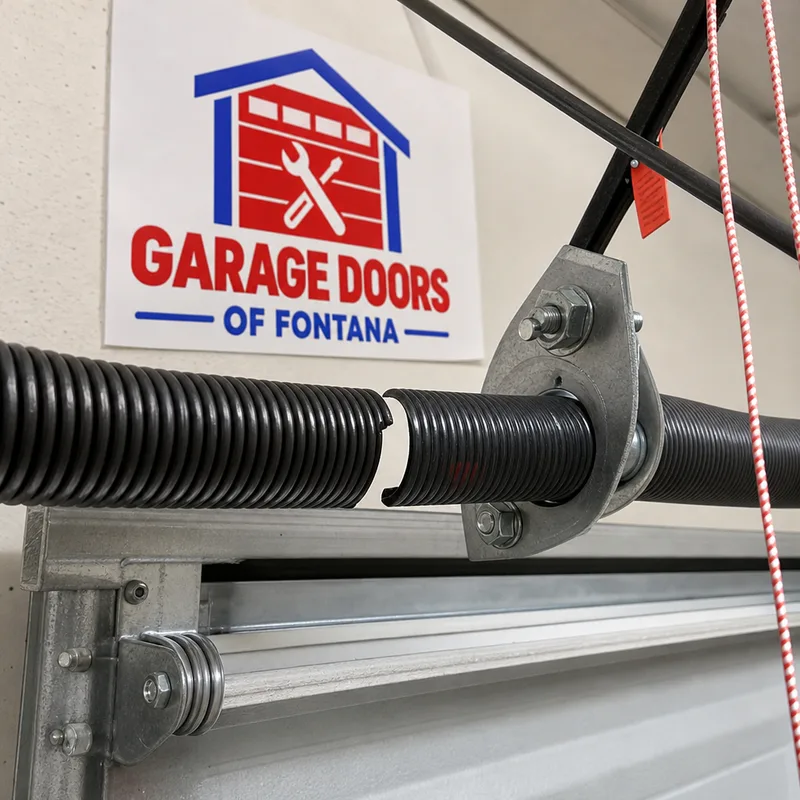
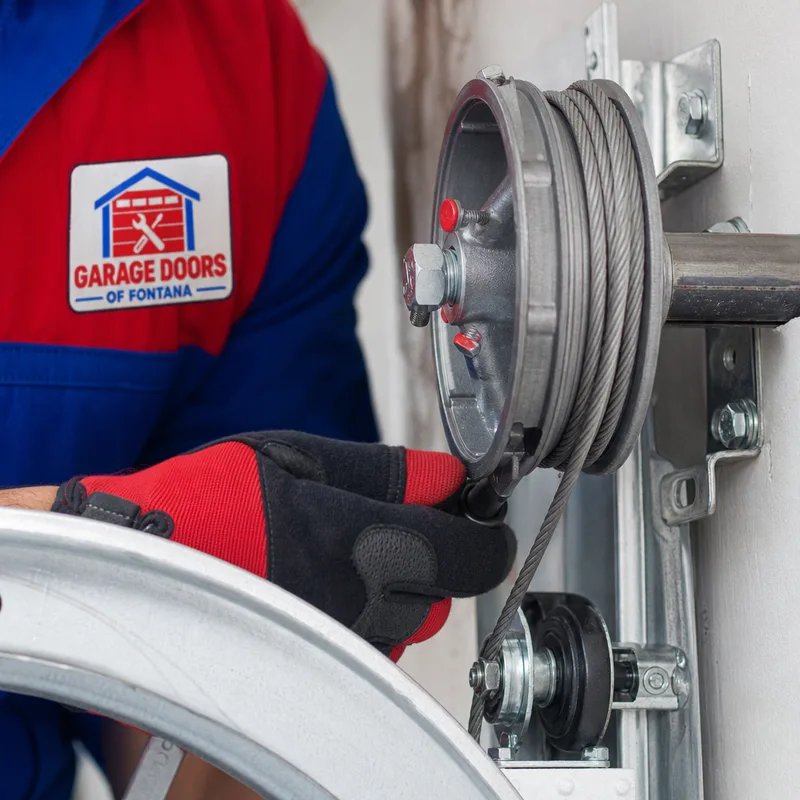
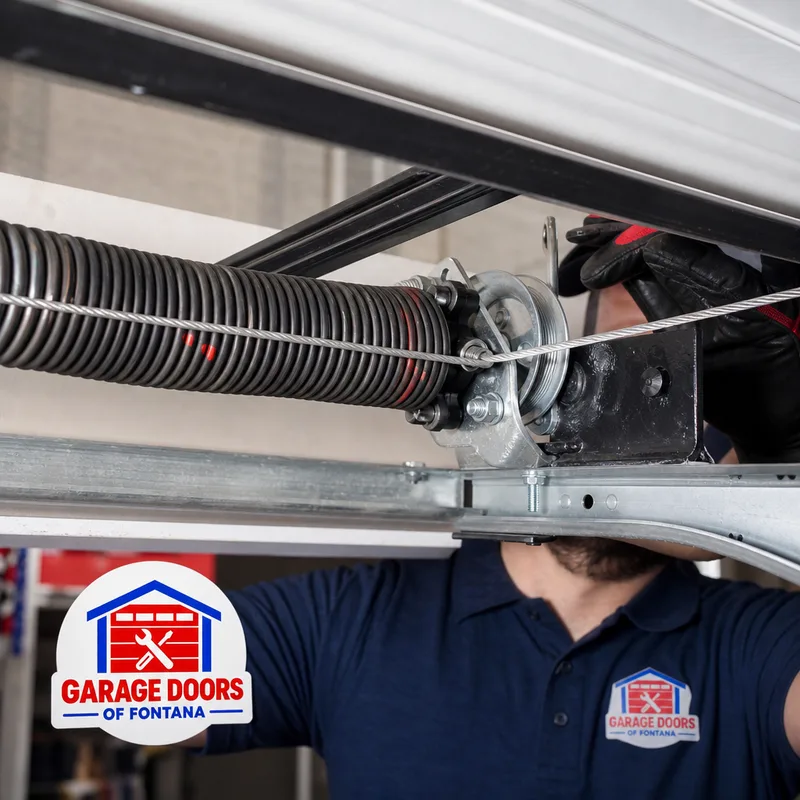
A broken spring usually shows up as a door that feels extremely heavy by hand, lifts only a few inches, or won't lift at all. In many cases you can also see a gap in the torsion spring above the door or find an extension spring dangling along the track. An opener problem is more likely when the door moves freely by hand but the motor won't run or the trolley won't engage. A contractor can confirm the cause once they see how the door behaves and inspect the spring system.
Torsion springs mount on a shaft above the door and are wound to store torque; extension springs stretch along the horizontal tracks and rely on pulleys and cables. Torsion spring replacement involves safely unwinding any remaining tension, swapping the springs, then winding to the correct turns and balancing the door. Extension spring repair typically includes replacing the springs and checking pulleys, safety cables, and attachment points so the door lifts evenly.
On a two-spring torsion setup, many contractors recommend replacing both because the springs have done the same work cycles and balance depends on matched lift. If only one is replaced, the door can end up uneven or the older spring may fail soon after. The contractor you speak with can explain what they see on your setup and what they recommend for consistent balance.
The most helpful details are whether the door is stuck open or closed, whether you heard a bang, and whether the opener hums or strains. If you can safely look from inside the garage, note whether you have a torsion spring above the door or extension springs along the tracks. Also mention door material if you know it—steel, wood, or insulated—since weight affects spring sizing.
A garage door with a broken spring can be heavy enough to cause injury or damage if it drops, and lifting it can pull cables off the drums. If you must move it, keep people clear and avoid standing under the door, but the safer choice is to leave it closed and talk with a contractor. They can advise next steps based on whether the door is stuck open, partially open, or closed.
A proper finish includes a balance test, a full travel test, and a close look at cable tracking on the drums. The contractor may also check end bearings, the center bearing, the torsion shaft, and bottom brackets for wear or movement caused by the spring break. If an opener is connected, the force settings and travel limits may need adjustment after the door is balanced.
Yes, if you describe the door type and what's happening, we can work to connect you with a local contractor who handles that kind of spring system. Roll-up and commercial doors can use different drums, shafts, and spring configurations than a typical residential sectional door, so those details help route you to the right contractor.
If you suspect a broken garage door spring, call and describe the symptoms once. Garage Doors of Fontana will connect you with a local contractor who can inspect the spring setup, explain replacement options, and get the door balanced so it operates normally.
CALL NOW: (840) 232-3980